
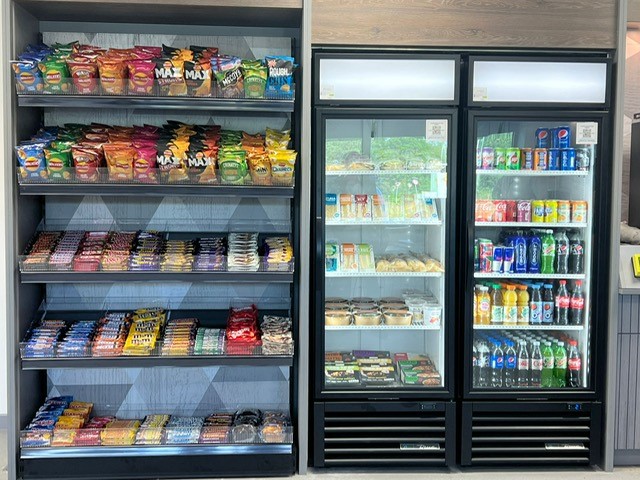
Traditional Vending Machines VS Micro Markets
When lunchtime hits, there’s nothing more convenient than wandering down to the breakroom and grabbing a quick snack or healthy meal deal. For decades, vending machines have been the go-to solution for workplace refreshments. However, micro markets are becoming the next big thing and are paving the path towards the future of vending. These open-concept, self-serve markets are transforming how employees access food and beverages at work. So, which option is right for your workplace? This blog explores the key differences.
What are Vending Machines?
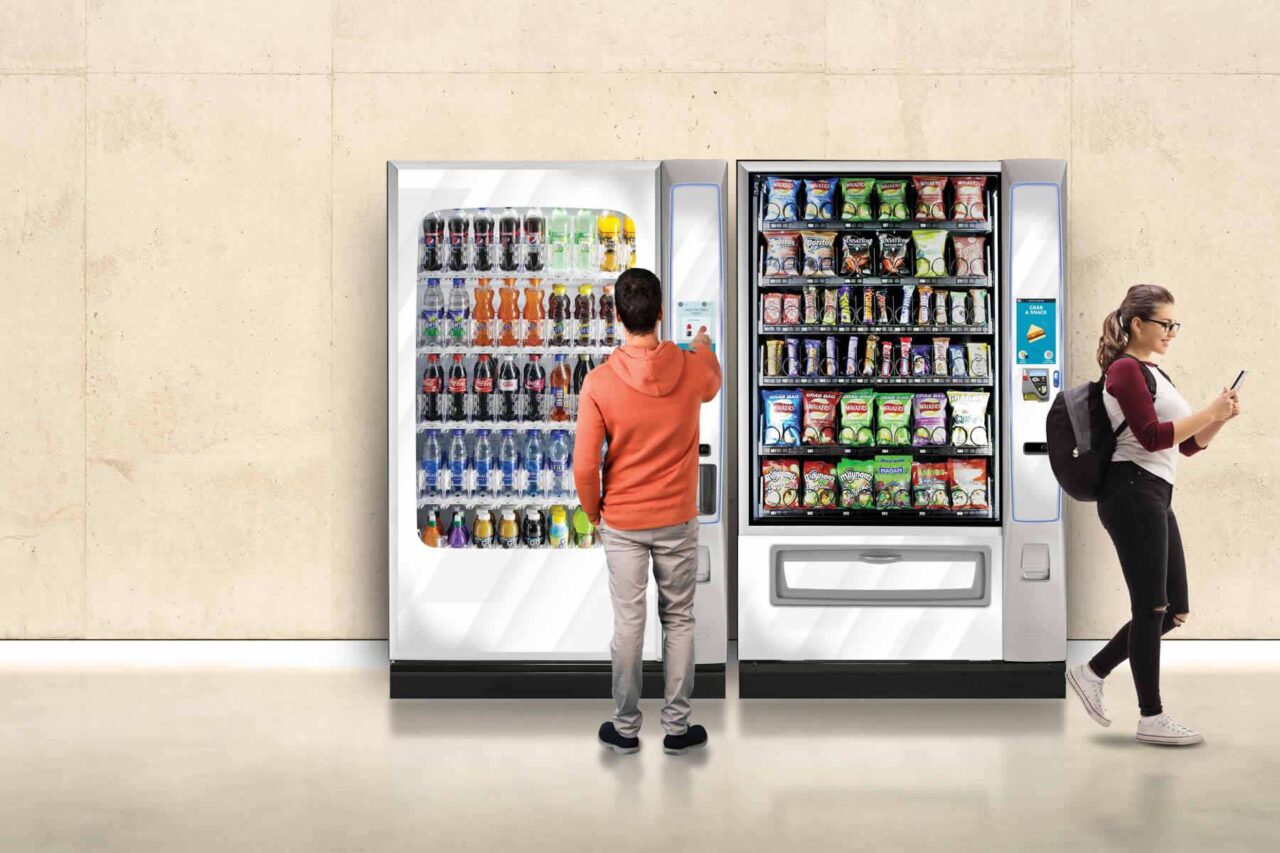
Vending machines are automated, self-service dispensers that have been a workplace staple for decades. These familiar machines typically store drinks and snacks in spirals behind glass and can only be dispensed through a simple mechanical system after payment. There are typically three types of vending machines: snack vending machines, cold drink vending machines, and combo units that offer both.
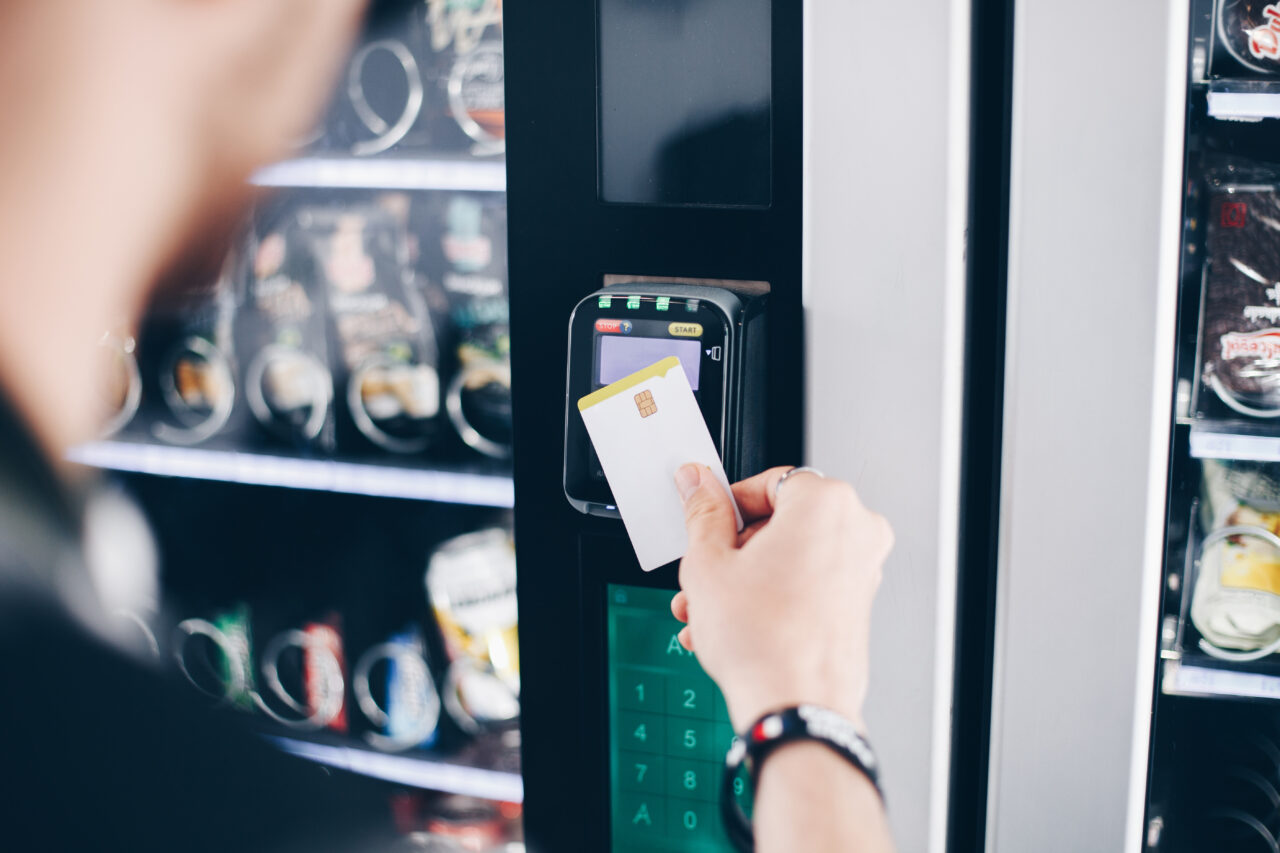
Modern vending machines usually except various payment methods including cash, credit card, and mobile payments. With the average size of around 6 feet tall and 3 feet wide, they’re compact enough to fit into most spaces and typically hold around 30-40 different products, although this can vary depending on the machine. Snack vending machines are limited to long life packaged products, however purchasing a vending machine is more cost effective and require minimal vending machine maintenance. One of the biggest selling points of a vending machine is that they operate 24/7 without needing staff, making them an ideal solution for smaller offices or locations with shift work and limited space.
What are Micro Markets?
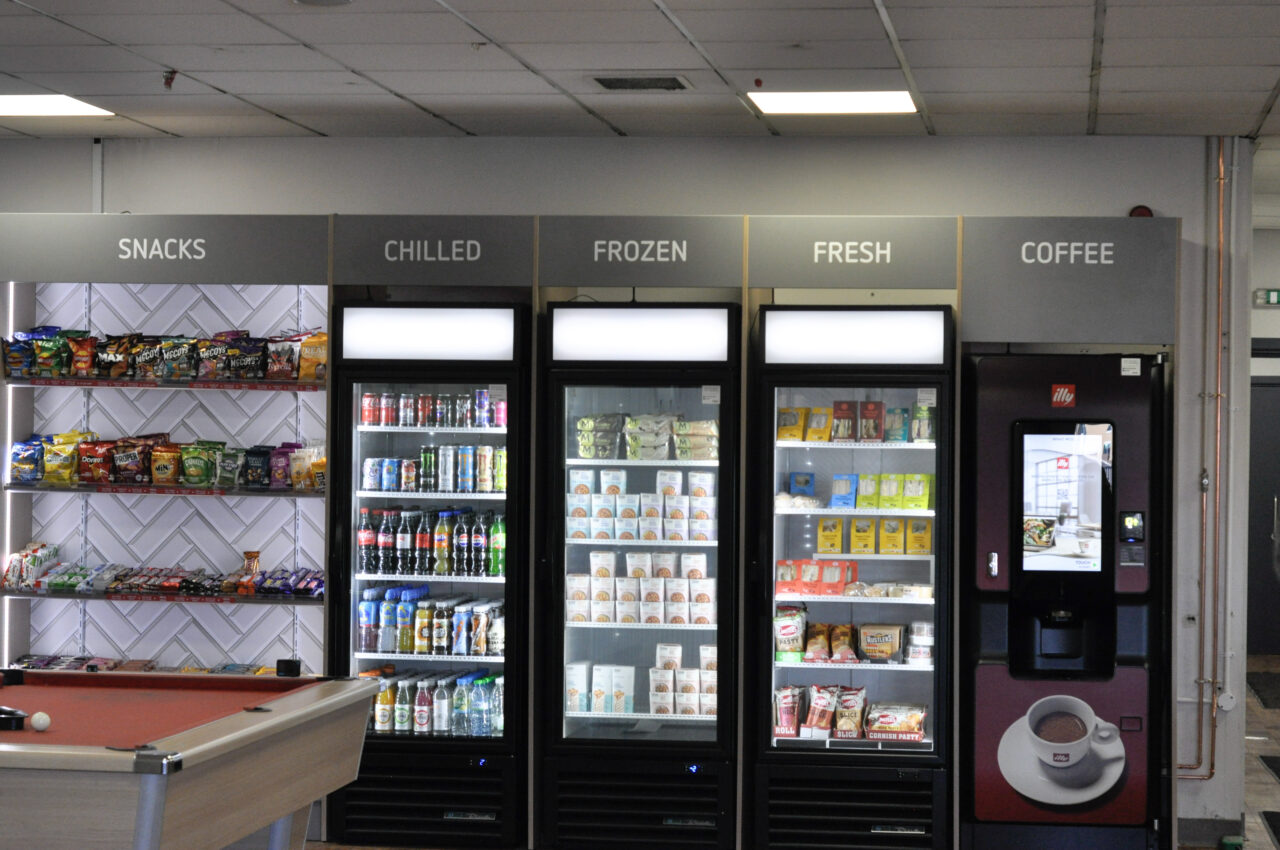
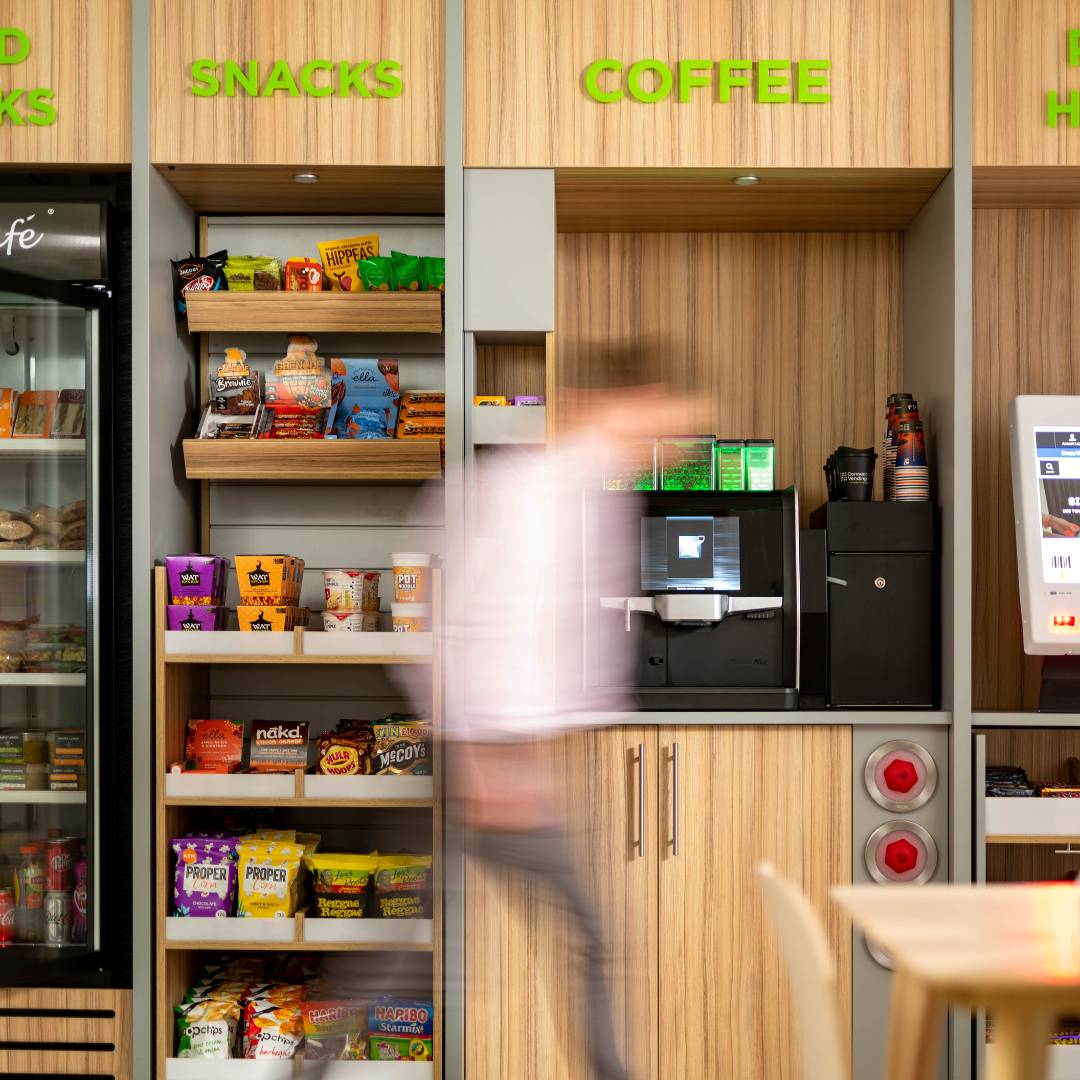
A micro market vending machine is essentially a mini self-service convenience store located in your workplace. Unlike traditional vending machines, micro markets operate with open shelving and refrigerated cases that allow employees to browse and pick up products freely, creating a more natural shopping experience similar to popping to the shops. These markets are focused on a centralised self-service checkout where employees can scan their items and use a debit card, contactless, mobile payments or even an employee badge system to checkout.
Typically, micro markets require at least 100-150 square feet, although this doesn’t have to be the case and their bespoke nature means that they can be tailored to fit any size and shape. Micro markets also offer a wider product range, typically fitting 300+ items including fresh salads, sandwiches, hot meals and of course the traditional sweet treats and drinks. They use smart technology to track inventory in real-time, monitor sales and provide extensive analytics on purchasing behaviour.
While micro market vending kiosks require a larger space than traditional vending machines they have become increasingly more popular in medium to large offices because of their ability to offer a healthier, fresher approach to workplace food and beverages.
Even though micro markets and vending machines both provide workplace refreshments, the differences between the two are substantial. On average micro markets attract 18% more visits per day with an average of 1.2 sales per visit, compared to 0.7 sales in a UK vending machine.
Vending Machines: Pros and Cons
Pros:
- Lower upfront investment: It is usually more affordable to rent or purchase a vending machine and install them, making them more accessible for businesses of all sizes
- Minimal space requirements: With the compact size of a vending machine it is easy to fit them into small breakrooms, corners, or hallways
- Simple maintenance: Restocking a vending machine is simple and these machines require minimal upkeep compared to larger installations
- Familiar and easy to use: Almost everyone knows how to use a vending machine
- Secure by design: Products are locked behind glass, reducing the risk of theft or tampering
Cons:
- Limited product variety: Typically restricted to 30-40 stable, packaged items
- No fresh food options: Vending machines can rarely accommodate salads, sandwiches or other perishables that require daily restocking
- Less engaging experience: The automated, transactional nature of vending machines doesn’t encourage browsing or exploration
- Dietary restrictions: Vending machines have a limited ability to cater to specific dietary requirements like gluten free or low-sugar options
- Mechanical issues: On occasion products can get stuck in vending machine spirals, leading to frustrated employees

Micro Markets: Pros and Cons
Pros:
- Extensive product variety: Micro markets can stock 300+ products including fresh and frozen meals and premium drinks
- Better value for money: With a micro market you can build your own meal deal, something traditional vending machines struggled to offer
- Better employee experience: The open shopping format feels more like a shop than a vending machine and encourages employee satisfaction and repeat visits
- Accommodates dietary needs: Space for gluten-free, vegan, vegetarian and other options with clear labels that employees can stop and read
- Smart technology: Real-time inventory tracking, sale analytics, and the ability to adjust the offerings based on employee preferences
- Flexible payment options: Supports corporate subsidies, loyal programs and employee accounts
Cons:
- Space requirements: Micro markets typically need at least 100 square feet which may not be available in smaller offices
- More extensive maintenance: Requires daily restocking, organisation, and cleaning to maintain the retail experience
- Safety concerns: The open format increases shrinkage risk, making them better suited for close-loop environments like offices with security measures
Which Solution is Right for Your Business
Choosing between a micro market and a traditional vending machine depends on several key factors that are specific to your workplace. The decision ultimately comes down to understanding your workplace size, the space available, budget and your employee’s needs.
Vending machines are typically the better choice for smaller businesses with under 50 employees, particularly when the space and budget is tight. They excel in high traffic areas where employees can pass by and quickly grab a quick snack or drink. If your workplace operates in shifts, with employees coming and going, and you require a minimal maintenance solution that is cost effective then a vending machine may be the right choice for you.
On the other hand, micro markets become increasingly attractive when you have more than 50 employees who would benefit from a greater product range and crave fresh food items. If you have the space available, you work in a closed loop environment that is secure then a micro market can transform your workplace refreshment services. They’re particularly valuable when your workplace prioritises employee wellbeing and employee satisfaction. While micro markets require more resources for restocking and maintenance, the potential for higher revenue and improved employee retention often justify the investment for medium and large businesses.
Many businesses are finding a hybrid approach successful, for example you may install a micro market in the main breakroom to provide full meals and healthy while placing a vending machine in satellite locations such as lobbies or corridors. This strategy maximises convenience while catering to different employee needs throughout the facility. Think of it as the best of both worlds without forcing either-or decision.
Before making your final decision, consider these critical questions: How many employees will use the service daily? What are their dietary preferences and restrictions? How much space can you realistically dedicate and what’s your budget for both the initial investment and the ongoing operational costs? The answers to these questions will guide you toward the solution that best fits your unique workplace environment.